Why Intensive Therapy Sessions Make More Sense for EMDR and Brainspotting Than Regular Talk Therapy
And Why Intensive Therapy Saves You Time and Money
I get it. Therapy is expensive. Especially when a therapist does not accept insurance (here’s why our practice doesn’t take insurance any more).
As a therapist, I am always thinking:
How can I make the time and money spent on therapy worthwhile?
What modalities can I be trained in to meet my clients’ needs?
How can I make the therapy experience more effective?
The answers to these questions have led me to get trained in EMDR and Brainspotting (BSP). Both EMDR and BSP are “brain-based” therapy modalities. Meaning, they work to change the way your inner brain functions, and regulates your brain-body connection.
How are EMDR and Brainspotting Different from Talk Therapy or CBT?

Talk Therapy and Cognitive Behavioral Therapy (CBT) are working on the cerebral cortex part of the brain (AKA the outer brain). This part of the brain processes language, logic, problem solving, etc. This is appropriate for situations that are easily solved by changing thinking patterns, using boundaries in relationships, applying coping skills, etc.
But most mental health problems go deeper.
And Talk Therapy or CBT can’t go deeper in the brain.
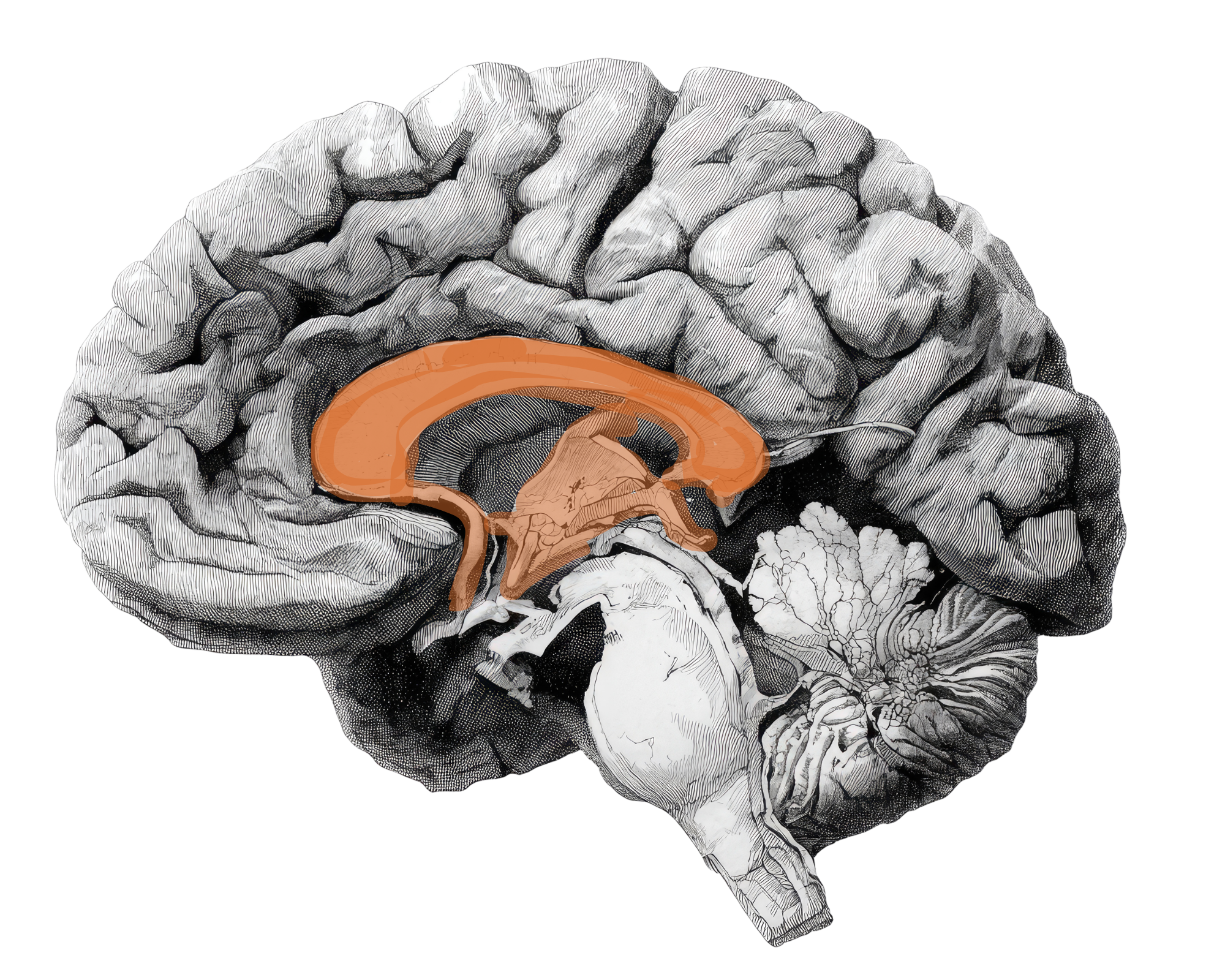
EMDR and BSP help activate the limbic system.
Our limbic system (AKA the inner brain) is where memories, emotions, and automatic responses (Fight, Flight, Freeze) are stored. If our emotional, behavioral, and/or mental symptoms are because of past experiences we need to treat the inner brain. No amount of CBT is going to get to the root of the problem.
Mental health modalities such as Eye Movement Desensitization and Reprocessing (EMDR) and Brainspotting activate the inner brain through different techniques.
In brief, EMDR activates the inner brain by rhythmically stimulating both sides of your body through eye movements, auditory tones, and/or gentle tapping of your body. This replicates REM (Rapid Eye Movement) Sleep, the point in the sleep cycle in which we dream.
Brainspotting differs by holding your gaze on a “brainspot,” a place in your visual field in which, when you look at the spot, your limbic system is activated.
Deep processing of emotions, past experiences, and bodily sensations occur with both EMDR and Brainspotting.
That’s all great, but why are longer Intensive Sessions better than the usual 50- minute therapy sessions?
I’m so glad you asked.
In short, you get the same results but faster and overall less time and money.
Instead of having a 50 minute session (aka a “therapeutic hour”) once a week, I schedule three 3-hour sessions over the course of three weeks. In one month you get 9 hours of therapy instead of 4. Over double.
I’ll break down the benefits further for you.
Benefits of Intensive EMDR or Brainspotting Sessions
You heal faster
In one day, you are doing more processing that you can do in a month of sessions. While I cannot guarantee you will be symptom-free at the end of intensive sessions, I can guarantee you will be healing at a faster pace than typical one hour sessions.
I have had several clients tell me that they have felt relief of their symptoms with intensive sessions after spending YEARS doing talk therapy.
You notice measurable changes
Before our first session and in between the second and third intensive sessions, I have you complete two questionnaires. One questionnaire focuses on Negative Beliefs, and the other is about Positive Beliefs. We will measure each of these beliefs for several reasons, but ultimately it is so you can see your results with data.
We also track your level of distress related to the specific area of concern you choose to focus our intensive sessions on. The area of focus can be a traumatic event, a strained relationship, current feelings of anxiety or depression, etc.
Our goal during intensive sessions is to get your level of distress from a 10 (or whatever number you rate your distress level) to as close to 0 as possible.
Anecdotally, I have had a client say a current issue is at an “11” on a 0-10 scale of distress. After one intensive session of EMDR that level of distress went down to a 2. Other clients report their levels of distress going down to manageable levels, rating distress anywhere from 0 to 3 at the end of intensive treatment.
A manageable level of distress is our ultimate goal with these intensive sessions. I want you to end our time together confident you can manage the stress, anxiety, depression, and relationships on your own.
Saves you time
Yes you might have to take time off work to participate in intensive sessions. But you also probably have to take time off or leave work early to attend weekly therapy. Or maybe you’re not in therapy because you don’t have the time. Intensive sessions are designed to be short-term. Not that I don’t/won’t like you, but I don’t want to see you weekly forever. I want you to heal quickly, so I have more time in my schedule to help more people.
I schedule three 3-hour sessions. If you only need one session, that’s great! We will cancel the last two. If you need more than three, we can discuss options. Usually clients see enough results in three 3-hour sessions that they do not need further intensive sessions immediately. You are always welcome to schedule more if you would like to see further results or a “tune-up” months/years later.
Saves you money
I won’t lie to you. It is more expensive up front because you’re paying for three hours at a time. But I promise you that in the long run you will spend less money.
Here’s why:
I charge the same hourly rate for intensive sessions as I do for my typical one-hour sessions. Some clinicians charge more per hour for intensive sessions. I personally do not.
More processing is completed in a 3 hour intensive session than in three 1-hour sessions.
Less time is spent “checking in” and “checking out” - we do it once in a 3 hour session versus three times in three 1-hour sessions.
You’re getting more work for the same hourly price.
I’ve also found that when clients schedule weekly sessions we can easily get caught up in weekly stressors that occurred, rather than getting to the inner brain work. That takes up precious time and your money.
I’ve experienced this myself as the client with my own therapy. I have gotten stuck in the weekly “crisis of the week” check-in with my therapist. And while talking about the stressors that occurred since our last session did help, what accelerated my healing was doing the EMDR work. Once we got to doing EMDR, I healed quickly. I was then able to manage my distress and end therapy for the time being.
Still not convinced that it saves you time and money? Take a look at these graphs.
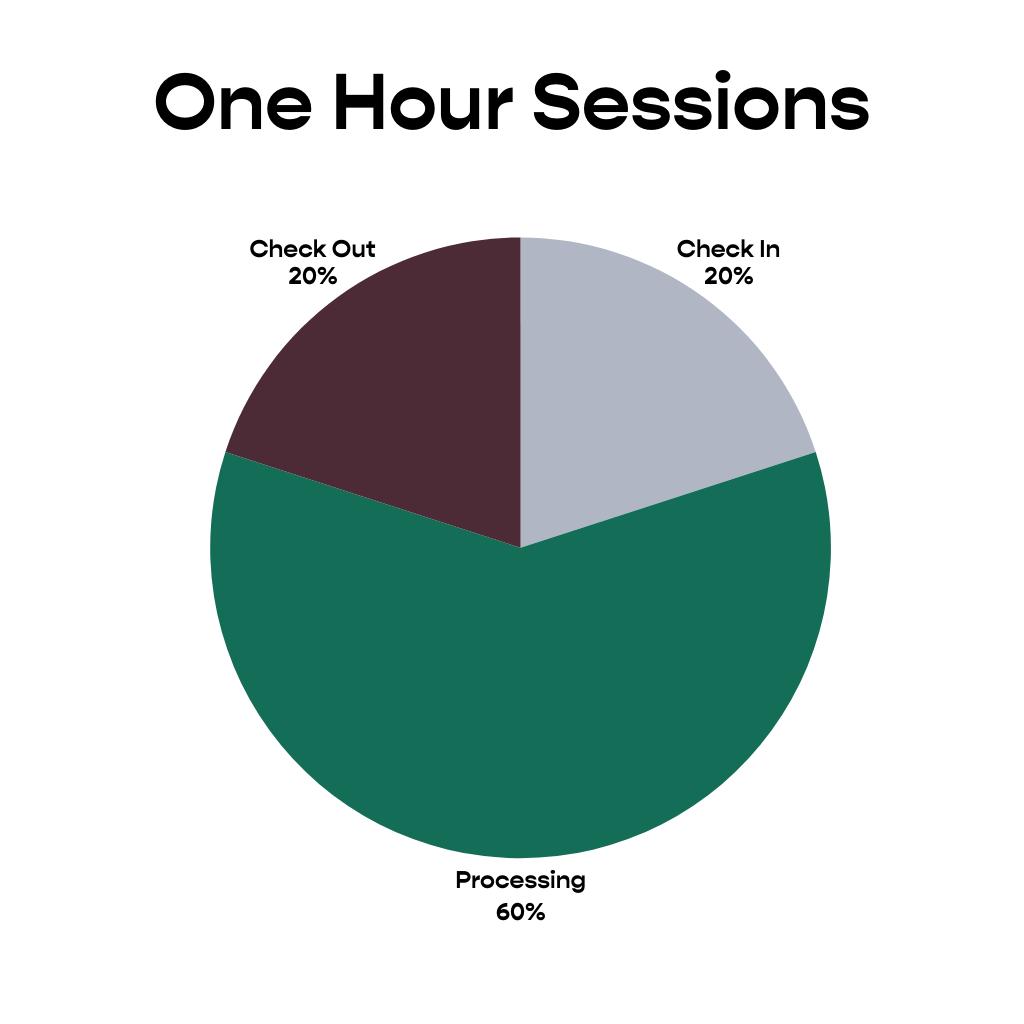
In a typical 50 minute session, the time is divided in three parts:
Check-in: 10 minutes
Processing: 30 minutes
Check-out: 10 minutes
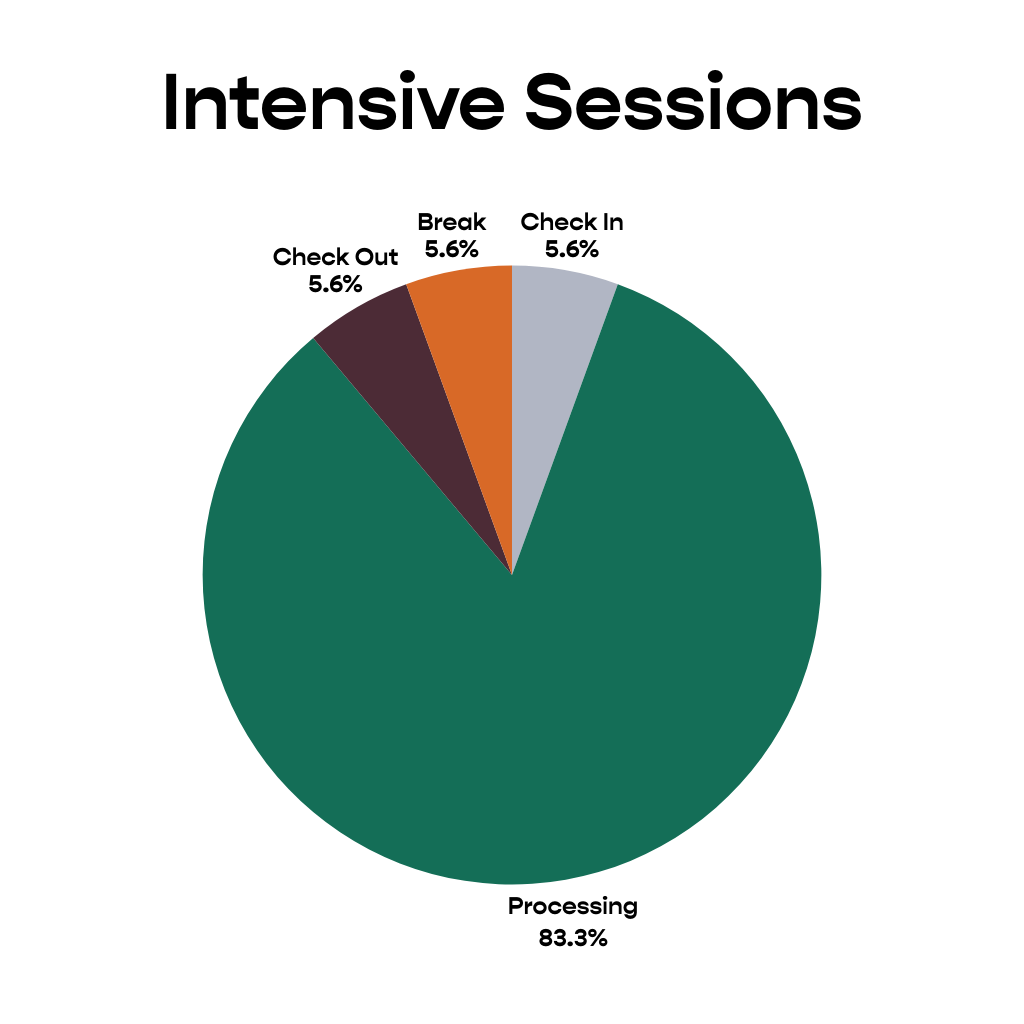
In a typical 3-hour (180 minute) session, the routine is:
Check-in: 10 minutes
Processing: 75 minutes
Break: 10 minutes
Processing: 75 minutes
Check-out: 10 minutes
If you schedule three 1-hour sessions, you’re only getting 90 minutes of processing versus 150 minutes in one 3-hour intensive session.
Taking it further: If you had nine 1-hour sessions, you’d get 270 minutes of processing. If you had three 3-hour sessions (9 total hours), you’d get 450 minutes of processing.
🤯
And that’s why I offer Intensive EMDR and Brainspotting Sessions.
For your healing. For your time. For your money.
For you.
If you are interested in Intensive Sessions using EMDR and/or Brainspotting and you live in the Cincinnati, Ohio area, I would love to work with you. I only offer Intensive Sessions in-person (sorry, virtual is too tricky at this time). I have an office in Blue Ash (near Summit Park) and typically schedule Intensive Sessions on Fridays, but I may be able to accommodate different days - just ask!
More information about Intensive Sessions - including what to expect, pricing, etc. can be found on this page.
I love offering Intensive Sessions and I hope you now understand the benefits. If you have further questions about Intensive Sessions, please reach out to me. I would be happy to answer any questions you have!
Written by Jenny Liu, LPCC-S
Owner and Therapist at Conscious Roots Counseling
You can email her: jenny@conscious-roots.com