
PARENTING SUPPORT THERAPY IN CINCINNATI
Because taking care of yourself isn't separate from taking care of your kids. It's the foundation of it.
You love your kids fiercely. You're also really, really tired.
Parenting is one of the most meaningful things you'll ever do. It's also relentless, humbling, and occasionally maddening in ways that nobody warned you about.
Maybe you find yourself reacting to your kids in ways that don't match who you want to be — snapping before you can stop yourself, shutting down when things get hard, or feeling a wave of guilt after a tough moment. Maybe you're carrying your own complicated childhood in ways you can feel affecting how you parent, and you really don't want to pass that on. Maybe you're parenting a child with intense emotions, big behaviors, anxiety, ADHD, or sensory differences, and the exhaustion isn't about one hard day — it's the relentless accumulation of advocating, adapting, and holding it all together, while trying to figure out what your kid actually needs from you.
(Maybe all of the above, depending on the day.)
Wanting to be a better parent isn't a sign that you're failing. It's a sign that you care deeply — and that you're paying attention. Support is one of the most effective things you can invest in, for yourself and for your kids.


Two ways we support parents at Conscious Roots Counseling
Jenny Liu offers individual therapy for parents who want to understand how their own history — including intergenerational trauma — is showing up in how they parent, so they can move forward with more awareness, calm, and choice. She also supports parents of neurodivergent children.
Megan Niehauser offers parent collaboration in two ways: as regular sessions for families whose children are already in play therapy with her, and as standalone sessions for parents who aren't currently bringing their child to therapy but want their own space and strategies. Either way, you're never just waiting and hoping — you're an active part of the process.
You don't have to know exactly which one you need. Reach out and we'll help point you toward the right fit.


Jenny's Approach: Healing Intergenerational Trauma
One of the most common reasons parents come to therapy is a quiet, persistent fear: I don't want to repeat what happened to me.
Maybe your childhood was difficult. Maybe it wasn't dramatically bad, but there were patterns — in how emotions were handled, how conflict played out, what was and wasn't talked about — that you don't want to pass on.
The research is clear that intergenerational trauma is real. Patterns of relating, coping, and responding to stress get passed down, often without anyone meaning for that to happen. But they're not destiny. With awareness, support, and the right kind of processing, those cycles can be interrupted.
This isn't parenting classes, and it's not someone telling you what you're doing wrong. Jenny's work is individual therapy — focused on you — that uses your experience as a parent as a lens into your own patterns, triggers, and history. Because here's the thing: parenting has a way of surfacing everything. The unresolved stuff from your own childhood. The fears you didn't know you had. The ways you learned to cope that served you then but create friction now.
Working through those things doesn't just help you feel better — it directly changes how you show up for your kids. Jenny uses Brainspotting, EMDR, and talk therapy to help you get there. Sessions are guided by what you bring, and shaped around your specific history. There's no script, no judgment, and no expectation that you have it all figured out before you walk in.
Jenny also has a specialized interest in supporting parents of neurodivergent children. As a parent to a neurodivergent child herself, she brings both professional training and lived understanding to this work — which means you don't have to spend your sessions explaining what it's actually like. She gets it.
Working with Jenny might be for you if…
Your child is going through something hard (a diagnosis, a transition, big behaviors) and you want support navigating it — not just for them, but for you
You're in a season of parenting that's stretched you thin, and you've realized you can't keep pouring from an empty cup
You're worried about repeating patterns from your own upbringing, and you're determined to do things differently
You find yourself reacting to your kids in ways that feel out of proportion — and you want to understand why, not just manage the symptoms
You're parenting a neurodivergent child and you're trying to figure out how to support them well — while also processing your own grief, fear, or exhaustion around it
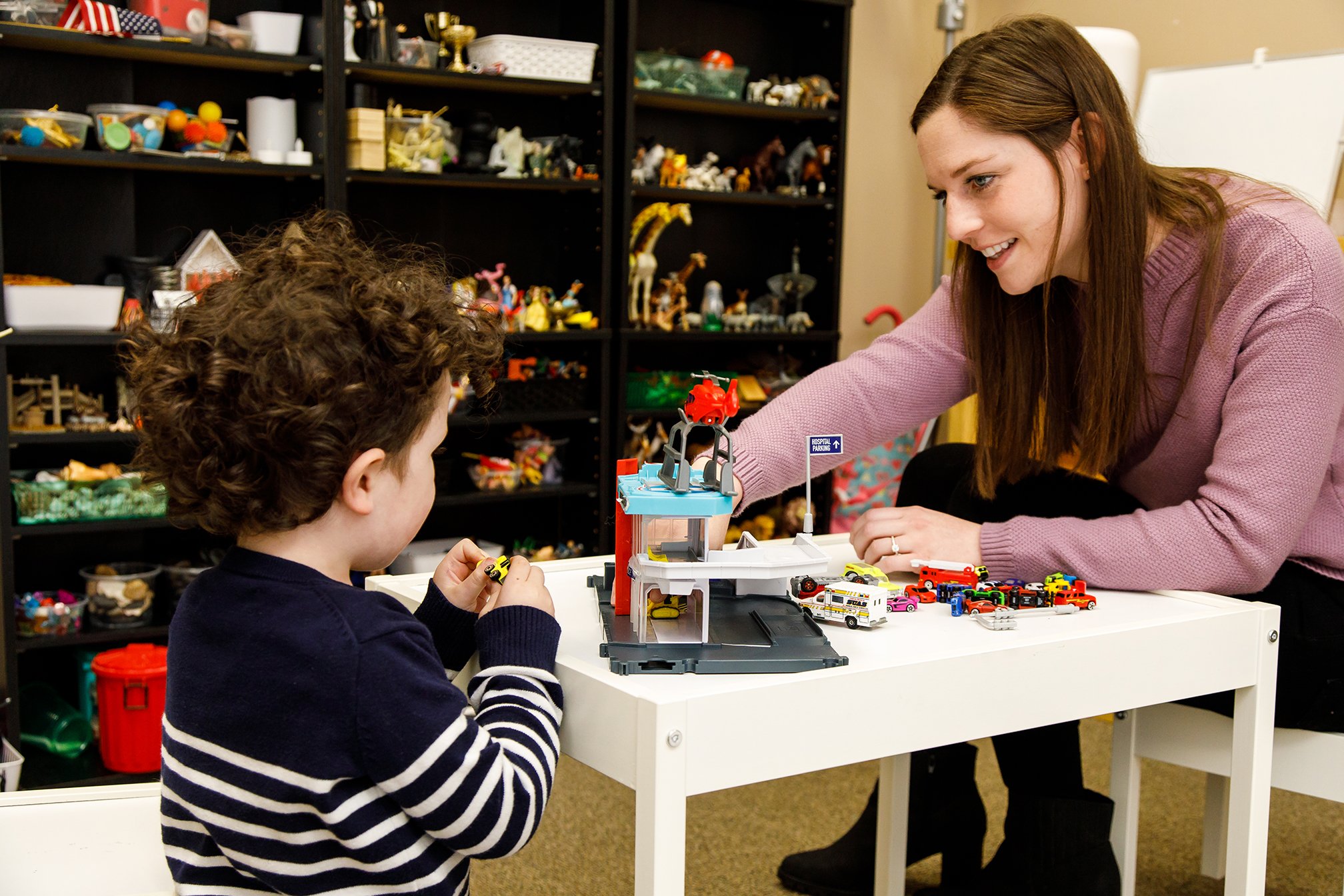
Megan's Approach: Parent Collaboration

Helping Parents Move from Survival to Connection
Parenting a child with intense emotions, challenging behaviors, anxiety, ADHD, trauma, or sensory differences can leave you feeling exhausted, overwhelmed, and unsure of what to do next.
If you've tried sticker charts, consequences, parenting books, and countless strategies — but nothing seems to create lasting change — you're not failing.
Often, the missing piece isn't another behavior strategy. It's understanding what your child's nervous system is communicating, and learning how to respond in ways that create safety, connection, and regulation.
Together, we'll help behavior make sense. You don't have to figure this out alone.
Megan's approach
Megan's parent collaboration is rooted in relational neuroscience and attachment science. Instead of asking, "How do we stop this behavior?" we begin by asking:
What is this behavior communicating?
What does my child need right now?
How can I stay regulated when my child is struggling?
How do we strengthen connection while setting healthy boundaries?
Children do well when they can. When they cannot, it's usually because their nervous system is overwhelmed — not because they're choosing to be difficult. Children are usually having a hard time rather than giving us a hard time.
When parents understand what's happening beneath the behavior, they can respond with greater confidence, compassion, and effectiveness.
What You’ll Learn
Through individualized parent collaboration, you'll develop practical skills to:
Understand your child's nervous system
Respond rather than react during difficult moments
Build stronger parent-child connection
Reduce power struggles
Increase emotional safety within your family
Support your child's regulation without losing your own
Set compassionate, effective boundaries
Create routines that foster success instead of conflict
Each session combines education, practical tools, reflection, and personalized support, so you leave with strategies you can immediately begin using at home.
What Parent Collaboration Looks Like
Parent collaboration is, well, collaborative — you are the expert on your child (besides your child knowing themselves of course!) so that’s also where the collaboration comes in. We have specialization in child development and parenting support. You have your expertise and experience with your child. We need both! and solution-focused.
We will work together to find what works best for you and your child.
Sessions may include:
Understanding recent challenging situations
Learning the neuroscience behind your child's behavior
Practicing regulation skills for yourself
Developing individualized parenting strategies
Creating realistic goals for your family
Celebrating progress while troubleshooting obstacles
This is a judgment-free space where your experiences are honored, your questions are welcomed, and your family's strengths are recognized.
Megan offers parent collaboration for parents raising a child with big emotions, challenging behaviors, anxiety, ADHD, trauma, or sensory differences — helping you understand what's underneath the behavior and respond in ways that build connection and regulation. Megan collaborates with parents in two ways: if the child sees Megan for play therapy with supplemental parenting support sessions or just parenting sessions without the child in play therapy.
We support the whole family.
Parenting support doesn't exist in a vacuum. If your child is also struggling, we offer therapy for children (ages 3–12) and adolescents through our practice as well.
Because we offer both individual therapy for parents and parent collaboration alongside child therapy, we can support you and your child working in tandem — from the same practice. You don't have to coordinate between multiple providers or explain your family's story from scratch in two different places.

Meet the therapists who offer parenting support at Conscious Roots Counseling

Jenny Liu, LPCC-S
Parenting therapy for adults, focused on healing intergenerational trauma
Jenny is our founder and a Licensed Professional Clinical Counselor-Supervisor with a deep interest in helping parents heal intergenerational trauma. She has a specialized interest in supporting parents of neurodivergent children — and as a parent to a neurodivergent child, she brings genuine lived experience alongside her clinical training. She uses Brainspotting, EMDR, and talk therapy to help parents understand how their own history is showing up in the present — and move forward with more awareness, compassion, and freedom.
→ Jenny is currently accepting new adult clients.
✉️ Email Jenny → jenny@conscious-roots.com

Megan Niehauser, LPCC, RPT™
Parent collaboration and Certified Synergetic Play Therapist
Megan offers parent collaboration in two ways: as regular sessions for families whose children are in play therapy with her, and as standalone sessions for parents seeking their own space and strategies for raising a child with big emotions, challenging behaviors, or neurodivergent needs. Rooted in relational neuroscience and attachment science, her work helps parents move from survival mode to genuine connection — understanding what's beneath a behavior so they can respond with more confidence and regulation. She brings the same warm, practical approach to parent sessions that she brings to her work with children.
Megan uses her knowledge from two specialized trainings to inform her work with parents: Synergetic Play Therapy and Robyn Gobbel’s “The Baffling Behavior Training Institute’s Immersion Program for Professionals.” When you work with Megan, you get the knowledge and educational materials from these professional trainings tailored to you and your family.
→ Megan currently has a waitlist. You can email her to be added to the waitlist.
✉️ Email Megan → megan@conscious-roots.com

Not sure who to work with? Reach out and we will help match you with the therapist right for you.
-
Jenny offers individual therapy focused on you — your history, patterns, and how they show up in your parenting, especially around healing intergenerational trauma. Megan offers parent collaboration focused on your child's specific behaviors and nervous system, and how to respond to them in the moment. Many parents benefit from one or the other; some benefit from both. If you're not sure, reach out and we'll help you figure out the right fit.
-
Yes — and you're not alone in feeling like this particular kind of parenting exhaustion is hard to explain to people who haven't experienced it. The advocacy, the adapting, the grief that can sit alongside the love — it's a lot to carry. Jenny brings both clinical training and her own lived experience as a parent to a neurodivergent child to this work. You won't have to spend your sessions translating.
-
Jenny's parenting support is therapy for you as the parent — your space, focused on your experience, patterns, and wellbeing. Megan's parent collaboration centers on your child's behavior and nervous system, though it's still a space for you. If your child also needs their own support, we can help with that separately.
-
Absolutely. You don't need a dramatic backstory to benefit from parenting support. The stress and identity shifts that come with raising kids are reason enough. Therapy isn't only for people in crisis — it's for anyone who wants to show up better, understand themselves more clearly, or feel less overwhelmed.
-
Nothing worked because behavior strategies alone usually aren't the missing piece. Megan's parent collaboration starts by understanding what your child's nervous system is communicating, then builds skills and responses from there — so the change actually lasts. Megan’s approach will help you build skills and responses related to connection, regulation, and felt-safety. You will work together with Megan to find the root cause of the behaviors you see rather than attempting short-term and quick “fixes” that behavior strategies usually attempt to achieve.
-
That's completely okay. You don't need a clear agenda to start. Bringing yourself to a session and saying "I'm exhausted and I don't know where to begin" is a perfectly valid place to start. Your therapist will help you find the thread.
-
Jenny's rates:
Initial/Intake Session: $165
Individual Sessions: $140
Megan's rates:
Initial/Intake Session: $160
Individual Sessions: $135
-
We are private pay / out-of-network. We can provide superbills for possible reimbursement through your insurance's out-of-network benefits. Use this guide to check your benefits, or reach out and we'll help explain how it works.
-
We are centrally located in the Greater Cincinnati area. Our office is in Blue Ash, and our office building backs up to Summit Park. Most of our clients come from neighboring areas such as Montgomery, Indian Hill, West Chester, Mason, Deer Park, Wyoming, Sharonville, Loveland.
We typically meet in person at our Cincinnati/Blue Ash location at 4424 Carver Woods Dr, Suite 100, 45242. We do offer virtual sessions if preferred. Most of our clients meet in person and use the virtual options for the occasional time they cannot come to our offices.
If you live anywhere in the state of Ohio we can offer virtual or telehealth sessions.
Questions about parenting support therapy? Here's what we are asked most often.