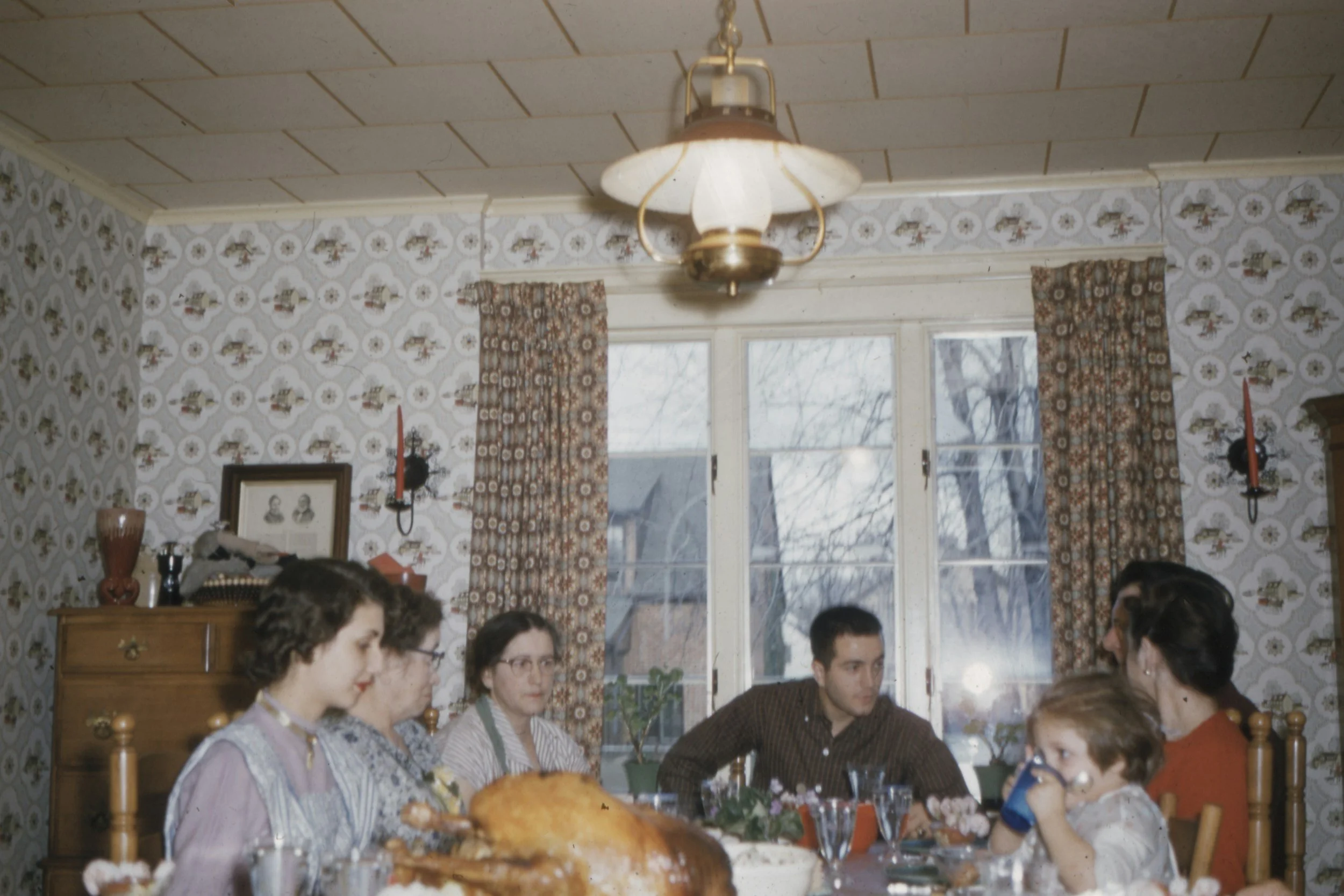
It's Thanksgiving, somewhere between the turkey and the pie. Your mom glances at your toddler, who is happily eating mashed potatoes with his hands, and says, "We never let you kids get away with that." She says it lightly. Your stomach drops anyway. Suddenly you're not a grown adult with a car payment and a calendar full of pickups. You're eight years old, bracing for what comes next.
If that moment feels familiar, you're in good company. It's one of the most common things parents bring to intergenerational trauma therapy in Cincinnati, especially this time of year.
With Thanksgiving about three weeks away, that knot may already be forming. In this post, I'll walk you through why family gatherings stir up old patterns, what therapy can offer before the holidays, what a first session actually looks like, and a few things you can start trying now.
Quick answer: Family holidays often bring intergenerational trauma to the surface because you're back in the setting where your nervous system first learned its patterns. Intergenerational trauma therapy helps you understand those roots, calm your body's alarm system, and plan how you want to show up, so you can be more present with your kids and less pulled back into old roles. Starting a few weeks before Thanksgiving gives you time to prepare.
Why do family gatherings stir up intergenerational trauma?
Because you're back at the original table. Intergenerational trauma means the stress, hurt, and survival patterns that get passed down through families, usually without anyone meaning to. It might look like an unspoken rule that nobody talks about feelings, a parent who was quick to anger, or a deep belief that love has to be earned by being "good." Most of these patterns started as protection. Somewhere along the way, they stopped being helpful but kept getting handed down anyway.
Here's something we say a lot at Conscious Roots: the past is lived in the present. Your body remembers your family long before your thinking brain catches up. So when you walk into your parents' house, smell the same casserole, and hear that familiar tone of voice, your nervous system may shift into protection mode within minutes. That's why you can feel like a capable adult in the car and a nervous kid by the time you hang up your coat.
Now add travel, sugar-fueled kids, skipped naps, and a few well-meaning comments about your parenting. That's a lot for anyone's system to hold. It's not you being dramatic. It's biology doing its job a little too enthusiastically.
What does intergenerational trauma therapy in Cincinnati offer before the holidays?
Intergenerational trauma therapy gives you a space to look at where your family patterns came from, how they show up in your life now, and what you want to do differently, especially as a parent. It isn't about blaming your parents or rehashing every hard memory. It's about understanding your roots so you get to choose what you pass down.
In the weeks before the holidays, therapy can help you:
Name the specific moments, topics, or people that tend to set off your alarm system
Understand what your body is doing when you freeze, people-please, or snap
Practice ways to calm your nervous system before, during, and after a gathering
Choose boundaries that feel doable (not just the ones you rehearse in the shower and never say)
Plan for repair if things go sideways with your kids, your partner, or yourself
Depending on what you need, we may use talk therapy, EMDR (which helps your brain reprocess painful memories so they carry less emotional charge), or Brainspotting (which uses where you look to access and release experiences held in the body). We also offer parent support sessions for guidance on what's happening at home. And if your child is having a hard time with the season too, Synergetic Play Therapy helps kids make sense of big feelings through play, with a therapist who helps them feel safe and regulated.
One honest note: a few sessions won't untangle decades of family history before the turkey comes out of the oven. But they can help you walk in with more understanding, a plan, and a little more room to breathe.
What does a first session look like?
If you've never been to therapy, or you had a not-so-great experience before, it's normal to wonder what you're walking into. Here's what you can expect.
We start by getting to know you. I'll ask what's bringing you in right now, what the holidays usually look like in your family, and what you'd like to feel different. We'll touch on your history, but you set the pace. You don't have to share every detail, and we won't jump into processing painful memories in the first session.
We'll also talk about your goals, whether that's getting through one dinner without shutting down or breaking a pattern you've noticed in your own parenting. By the end, you'll have a sense of how we'd work together and whether it feels like a good fit. Sessions are available in person in Cincinnati or online anywhere in Ohio, which comes in handy during a packed season.
Often, just saying the hard thing out loud to someone who gets it brings a little relief.
Three things I tell clients to try before a family gathering
These won't change your family. They can help you feel more like yourself while you're with them.
Make a grounding plan before you go. Pick one or two things that help your body settle, like a slow exhale, feet pressed into the floor, or a cold drink (iced coffee counts in my book). Decide ahead of time when you'll use them, such as in the driveway before you walk in or when a certain topic comes up. Planning ahead matters because a stressed brain isn't great at problem-solving in the moment.
Give yourself permission to step away. A walk around the block, a few minutes in the car, or volunteering to take the dog out all count. Stepping away isn't rude or avoidant. It gives your nervous system a chance to reset so you can come back as the parent you want to be.
Plan for repair, not perfection. You may still get snippy or slip into your old family role. That's okay. What matters most is what you do afterward. A simple "I got really overwhelmed at Grandma's, and I was short with you. That wasn't your fault" teaches your kids that relationships can recover. That may be something you never got to see growing up, and you're giving it to them anyway.
None of these work perfectly every time. They're practice, not a pass/fail test.
Frequently asked questions
Is it normal to dread the holidays with family? Yes. Family gatherings put you back in the environment where many of your patterns formed, so it makes sense that your body reacts. Dread is information, not a sign that something is wrong with you.
Do I have to cut off my family to heal intergenerational trauma? No. Therapy focuses on understanding patterns and choosing how you show up. Whether and how you spend time with family is your decision, and we'll support you wherever you land.
Is it too late to start therapy before Thanksgiving? Not at all. Even one or two sessions can help you build a plan. And the work doesn't stop after the holidays, which often bring up exactly what's most useful to explore next.
A gentle closing thought
Back to that table. Maybe your mom still makes the comment. But maybe this year you notice your stomach drop, take a slow breath, and remember you're not eight anymore. That pause is where change begins. If you'd like support before the busy season fills up, I'd love to hear from you. You can reach out to us here.
Begin Healing With Conscious Roots Counseling
We specialize in trauma-informed, compassionate care for intergenerational trauma. Our therapists offer:
Online and in-person options across Cincinnati, Ohio.
A gentle, attuned approach at your pace
Tools to build safety, connection, and self-trust
If you're ready to get started, visit our therapy for intergenerational trauma page to learn more detailed information about our approach, or contact us to set up an appointment.
Written by Jenny Liu, LPCC-S
Owner and Therapist at Conscious Roots Counseling
You can email her: jenny@conscious-roots.com