EMDR vs. Brainspotting: Finding the Right Trauma Therapy for You

If you're trying to figure out whether EMDR or Brainspotting is "better" for trauma, there's a good chance talk therapy hasn't fully gotten you there. Maybe the memories are still vivid. Maybe your body still braces before you've even consciously remembered why. The old story keeps playing, even when you'd really like it to stop.
You're not doing anything wrong. Some trauma just doesn't respond to words alone — it needs a different way in.
Both EMDR and Brainspotting are trauma-focused therapies built to go deeper than conversation. But they get there in genuinely different ways, and knowing the difference can make choosing feel a lot less like a guess.
At Conscious Roots Counseling in Greater Cincinnati, our therapist and owner, Jenny Liu is trained in both. That intake conversation before any processing begins isn't a formality — it's where we figure out what your nervous system actually needs. This isn't a coin flip. It's a clinical decision shaped by your history, your body, and how your trauma has been stored all this time.
Here's how each approach works, what the research says, and which situations tend to favor one over the other — so you can walk into that first session with real clarity instead of just hope.
How EMDR and Brainspotting Process Trauma Differently
Both therapies start from the same understanding: trauma doesn't just live in memory. It settles into the body and brain below the level of conscious thought — which is exactly why talking about it sometimes isn't enough to move it. Where EMDR and Brainspotting part ways is how they access and release what's stored there.
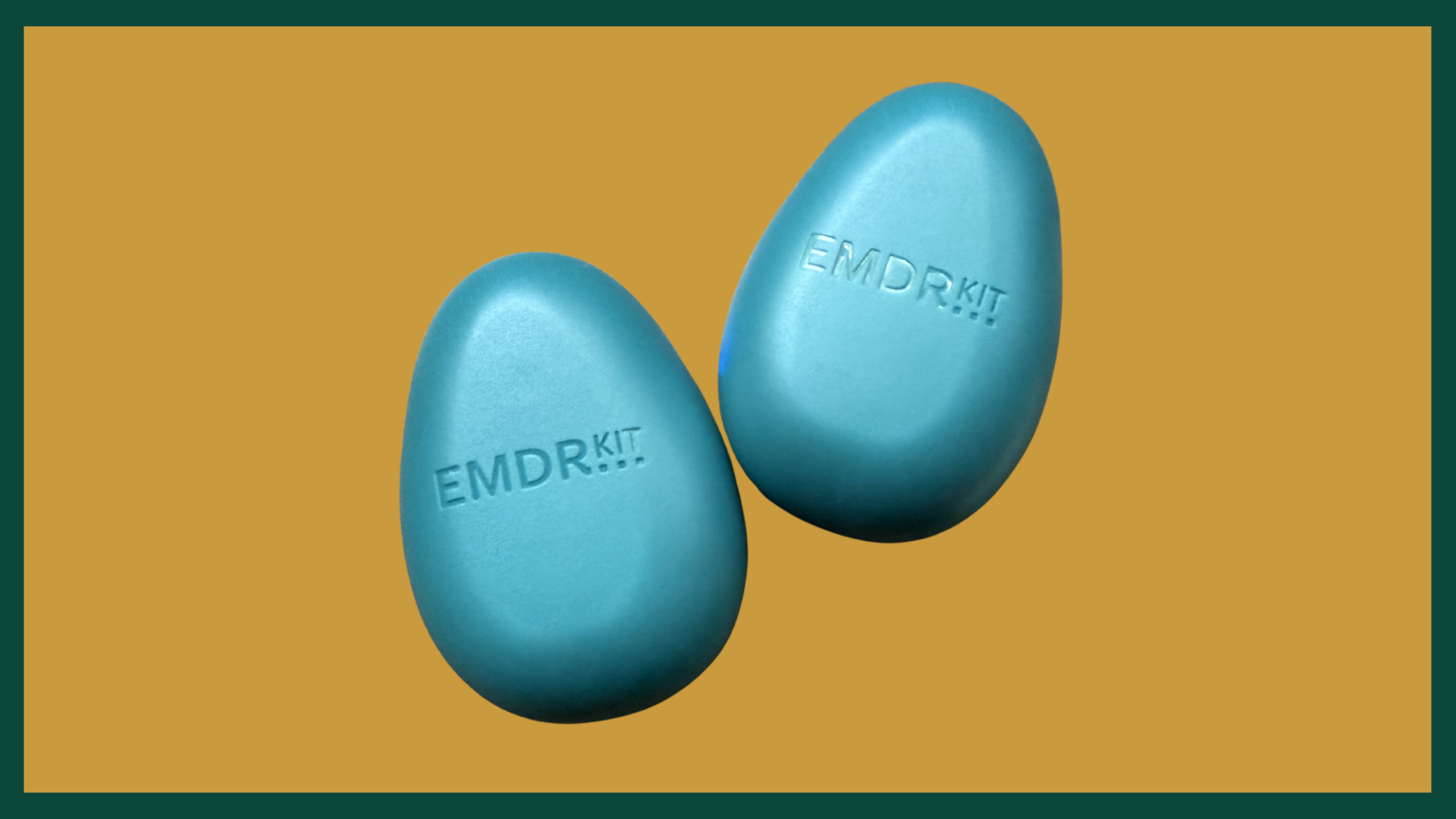
EMDR Pulsers - Used to gently vibrate opposite hands for bilateral stimulation.
The Science Behind Bilateral Stimulation in EMDR
EMDR (Eye Movement Desensitization and Reprocessing) uses alternating bilateral stimulation — guided eye movements, tones, or gentle taps — while you hold a traumatic memory in mind. This engages both sides of the brain at once, in a pattern researchers believe echoes the interhemispheric communication that happens during REM sleep, supporting connection between your emotional and rational processing centers.
Neuroimaging research suggests this stimulation shifts activity in both the amygdala (your alarm system) and the prefrontal cortex (your reasoning center), with amygdala reactivity tending to decrease as treatment progresses. In plain terms: a memory that once sent your whole body into alarm starts to lose its charge. You still know what happened. It just stops hitting the same way.
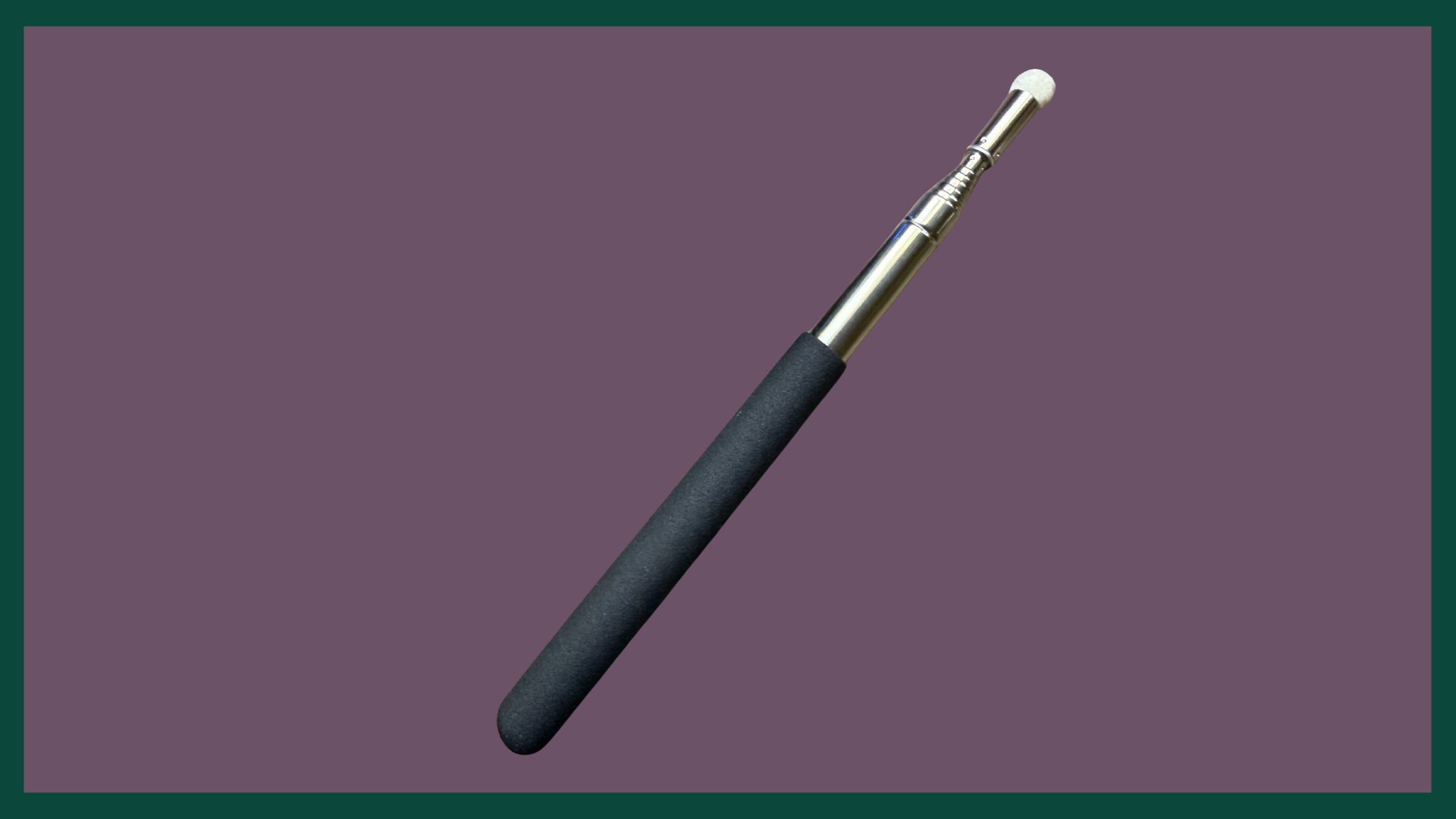
Brainspotting Pointer - Held by the therapist, the pointer helps you focus on the identified “brainspot.”
How Brainspotting Uses Gaze to Access Deeper Processing
Brainspotting (BSP) was developed by David Grand as an offshoot of EMDR, but it works through a different mechanism entirely. Instead of bilateral stimulation, a BSP therapist uses a pointer to help you locate a "brainspot" — an eye position thought to correspond with where trauma is being held in deeper, more primal parts of the brain. Sustained gaze at that spot is believed to activate and release stress responses stored below conscious awareness.
We want to be honest with you here: the exact mechanism is still being studied, not yet settled science. What we do see clinically is that clients often experience strong physical responses — sensation, spontaneous emotion, releases in the body — without narrating the memory at all. The processing happens quietly, internally, led by sensation rather than storytelling.
What This Difference Means for You
EMDR keeps both hemispheres engaged, with your thinking brain staying somewhat present throughout. Brainspotting works at a deeper, quieter level, more sensation-led and internal. Neither is "better" just because of how it works. What matters is which mechanism tends to fit which kind of trauma — and that's really the heart of this whole conversation.
Which Therapy Is Better for Trauma, EMDR or Brainspotting, Once You're in the Room
Understanding the mechanics is useful. But knowing what it feels like to sit in the chair matters just as much before you commit to either one.
EMDR's Eight-Phase Protocol
EMDR follows a structured eight-phase protocol across multiple sessions. Early phases focus on history-taking and building coping tools — before any trauma processing starts. Phases three through eight (assessment, desensitization, installation, body scan, closure, and reevaluation) repeat for each memory you're working through.
Sessions are offered as 1-hour sessions or 3-hour Intensive Sessions. Single-incident trauma often resolves in 3–6 sessions; complex or developmental trauma usually takes 8–12 or more. Progress gets tracked using the SUDS scale (Subjective Units of Distress), which gives you and your therapist a clear, ongoing read on how things are moving. That built-in feedback loop is one of EMDR's real strengths — you're never wondering if it's working.
Curious about concentrated or Intensive Session formats? See Why Intensive Therapy Sessions Make More Sense for EMDR and Brainspotting Than Regular Talk Therapy.
Brainspotting's Flexible, Client-Led Process
Brainspotting is far less scripted. Your therapist locates a brainspot with a pointer, you hold your gaze there, and processing unfolds through sensation and emotional release rather than a formal sequence of steps. There's no eight-phase map here — your therapist follows your nervous system's lead, session by session.
BSP sessions are also offered as 1-hour sessions or 3-hour Intensive Sessions. For trauma held in the body, many clients notice meaningful shifts within 4–6 sessions for a specific target, though complex presentations vary a lot. Worth noting: these numbers come mostly from clinical reports and smaller studies rather than large trials. One study — Hildebrand et al. (2017) — used just three 60-minute sessions and found BSP produced results comparable to what EMDR typically achieves over a longer course. Promising, and worth more research to confirm.
What the Research Actually Says About Outcomes
Both therapies are respected in clinical circles. But their evidence bases aren't the same size, and we think you deserve the honest version of that story.
The Hildebrand Study: The Only Direct Comparison
Hildebrand and colleagues (2017) ran the only head-to-head randomized controlled trial comparing EMDR and BSP. They enrolled 76 adults with PTSD symptoms, randomly assigned them to one modality or the other, and measured outcomes before treatment, after treatment, and again six months later. Both groups showed significant improvement across PTSD, anxiety, and depression measures.
EMDR showed somewhat larger effect sizes right after treatment (Cohen's d: 1.19–1.76) compared to BSP (0.74–1.04). By the six-month mark, that gap had mostly closed: EMDR held at 1.11–2.12, BSP reached 1.06–1.36. The researchers concluded BSP is a clinically effective alternative to EMDR for PTSD, with comparable outcomes long-term. A secondary look at 53 participants found three sessions of BSP matched three sessions of EMDR — a promising but preliminary finding, given the sample size.
The Evidence Depth Gap
EMDR has decades of support behind it and is endorsed by the American Psychological Association, the Department of Veterans Affairs, and the World Health Organization as a first-line PTSD treatment. That's a lot of testing, across a lot of different people and trauma types, with consistent results.
Brainspotting's evidence base is real, but it's younger and smaller — built more on emerging and quasi-experimental research. Coubard et al. (2022) found EMDR and BSP performed equally well at reducing distress tied to autobiographical memories in healthy adults, with both outperforming meditation and relaxation controls. Encouraging — though that study looked at healthy adults, not a clinical PTSD population.
We're not going to pretend Brainspotting is "just as studied" as EMDR. It isn't, yet. But it's also not unproven. It's promising, and it's growing.
So What Does "Comparable Outcomes" Actually Mean for You?
Here's the thing — this isn't a ranking. EMDR doesn't win. BSP doesn't lose. The research consistently shows both produce real, lasting change for trauma symptoms. EMDR just has a bigger paper trail behind it right now.
The stronger predictor of your outcome isn't which modality has more citations — it's clinical fit.A therapist who knows both, and who takes the time to actually understand your presentation, matters more than defaulting to whichever one has more studies attached to its name.
Which Presentations Tend to Favor Which Therapy
This is where things get genuinely useful. Research and clinical experience point to some clear patterns.
When EMDR Tends to Be the Stronger Fit
EMDR has the strongest track record with single-incident trauma — accidents, assaults, medical events, or other discrete experiences with a clear memory attached. It's also well-established for anxiety, phobias, and PTSD marked by intrusive thoughts or flashbacks that follow a strong narrative thread. The structured protocol gives explicit scaffolding, which can be a real gift if you need predictability and safety before you're able to go anywhere near processing at all.
EMDR is also better studied in children and adolescents than BSP is. In settings where a formal, evidence-backed protocol matters — for accountability, for insurance, for peace of mind — EMDR gives both you and your therapist clear ground to stand on.
When Brainspotting May Serve You Better
Brainspotting tends to shine in different territory: complex and developmental trauma, attachment wounds, experiences from before you had words for them, and somatic presentations like chronic tension or physical symptoms with no clear medical explanation.
Because BSP asks little to no active verbal narration, many people find it less exhausting and less re-triggering than approaches that require talking through the memory in detail. If you carry dissociative patterns, strong shame responses, or trauma that seems to live more in your body than your memory, BSP's body-led approach often reaches what other methods couldn't. And if you've already tried talk therapy — even more cognitively-focused work — and the trauma just hasn't budged, this quieter, sensation-based process might be the missing piece.
Safety and Readiness, for Both
Neither therapy is right for every client without a proper clinical assessment first — and that's true no matter how much you might want quick relief. Clients dealing with significant dissociation, active suicidality, or severe destabilization need real stabilization work before trauma processing begins, in either modality. EMDR builds this in structurally, through its formal preparation phase. With Brainspotting, pacing relies more on your therapist's judgment and your ongoing communication in the room.
This is exactly why working with a trained clinician matters more than picking a modality off a checklist. (For clients with dissociative identity disorder or high dissociation scores, EMDR also requires real modification — longer preparation, shorter stimulation sets.) Both therapies carry risk if rushed. Both are deeply effective when paced right by someone who knows what they're doing.
How to Choose Between EMDR and Brainspotting
You've got the framework now. Here's how to turn it into a next step.
A few questions worth sitting with before you even talk to a therapist:
Is your trauma tied to one specific, identifiable event — or is it relational, chronic, long-standing?
Do you experience it more in your body (tension, physical sensation) or more in your thoughts (intrusive images, detailed flashbacks)?
Has talk therapy ever felt re-traumatizing when you've had to narrate the memory out loud?
Do you need structure to feel safe — or does structure feel more like a cage?
These aren't diagnostic. They won't make the decision for you (we know, annoying). But they give a trained therapist real material to work with. A good intake process uses your answers to these — and plenty more — to point you toward a genuine starting place, not a guess.
Why You Don't Have to Figure This Out Alone
Here's the clearest thing we can tell you: the best predictor of your outcome isn't which modality you pick in isolation. It's working with someone trained in both, who can look at your history and match the approach to your nervous system — not the other way around. That's what the research supports, and it's what we believe clinically, too.
(For a more focused side-by-side, see What's Better? EMDR or Brainspotting?.)
At Conscious Roots Counseling, we offer both EMDR and Brainspotting for adults and adolescents across Greater Cincinnati — in person and virtually throughout Ohio. You don't have to commit to a modality before we've even heard your story. Our intake process is built to take that pressure off completely, so the right choice comes from fit, not a guess you made alone at 1am.
Frequently Asked Questions
Which therapy is better for trauma, EMDR or Brainspotting?
Neither is universally "better" — the research shows both produce real, lasting change for trauma symptoms. EMDR tends to be the stronger fit for single-incident trauma and situations that call for a structured, well-researched protocol. Brainspotting often serves complex trauma, attachment wounds, and body-held presentations better. The right choice depends on your history and nervous system, which is exactly what an intake session is for.
Is Brainspotting as effective as EMDR?
The one head-to-head study we have — Hildebrand et al. (2017) — found comparable outcomes between the two at six-month follow-up, though EMDR carries a much larger body of research overall. Brainspotting's evidence base is smaller but genuinely promising.
How many sessions does EMDR or Brainspotting take to work?
EMDR sessions run 1 hour or “intensive” 3-hours, with single-incident trauma often resolving in 3–6 sessions and complex trauma taking 8–12 or more. Brainspotting sessions are also 1 hour or “intensive” 3-hours, with many clients noticing shifts within 4–6 sessions for a specific target — though this varies with complexity.
Can EMDR and Brainspotting be combined?
Yes. Many therapists, including Jenny Liu, integrate both over the course of treatment as a client's needs shift. You're not locked into one modality forever.
How do I know which one is right for me?
A trained therapist will usually ask about the nature of your trauma (single event vs. ongoing/relational), whether it shows up more physically or cognitively, and how past therapy has felt in your body. A good intake conversation should point toward a starting place — you don't have to self-diagnose the modality.
The Bottom Line
There isn't a universal answer here — it depends on your history, your nervous system, and how you've been carrying what happened. EMDR tends to be the stronger choice when you need structure, are working through single-incident PTSD, or need a formally evidence-backed approach. Brainspotting often serves complex trauma, attachment wounds, somatic patterns, and anyone for whom talking has felt more like a wall than a doorway. Plenty of clients end up with both, woven together as their needs shift over time.
What the evidence says clearly: both therapies create real, lasting change for people carrying trauma that talk therapy alone hasn't reached — EMDR backed by decades of research, BSP backed by promising and growing work. Neither wins on paper. The right one is simply the one that fits you.
If you're ready to explore which approach might fit your story, we offer free consultations to help you find that clarity — no need to have it all figured out before your first appointment. Learn more about our Brainspotting + EMDR Therapy in Cincinnati, Ohio, or reach out to schedule a consultation. We'll help you trace the roots first, then figure out together how to move forward.
Written by Jenny Liu, LPCC-S
Owner and Therapist at Conscious Roots Counseling
You can email her: jenny@conscious-roots.com