It's 9:47 p.m. Your kid is finally asleep, and you're on the couch typing "play therapist Cincinnati" into your phone. Maybe it's the meltdowns that seem to come out of nowhere. Maybe a teacher gently suggested "someone to talk to." Or maybe you just have a feeling something is weighing on your child, and you want to help.
Then the results load. Dozens of names, a pile of acronyms, and websites that all say "compassionate" and "child-centered." Twenty minutes later, you have 11 tabs open and less clarity than when you started. 🫠
If that's you, take a breath. Too many options can feel just as stuck as too few. As a former Registered Play Therapist (and a parent myself), here are the five things I'd want any parent to look for, and how we handle each one at Conscious Roots.
Quick answer
The right play therapist for your child has specialized play therapy training, explains their approach in plain language, makes first contact easy, lists fees and payment options clearly, and feels like a good fit for your family. At Conscious Roots Counseling in Cincinnati, Ohio, Megan Niehauser, a Registered Play Therapist and Certified Synergetic Play Therapist, leads our play therapy work with children, and we support parents alongside them.
1. What training should a play therapist in Cincinnati have?
Look for a licensed therapist with specific, ongoing training in play therapy, not just a room with toys in it.
Why it matters: Play is how children communicate what they can't yet say in words. Any therapist can buy a dollhouse. Knowing what's happening at the dollhouse, and how to respond so a child feels safe, takes real training.
One credential worth knowing is the Registered Play Therapist (RPT) designation from the Association for Play Therapy. It means the therapist completed play therapy coursework and supervised play therapy experience beyond their basic license. It's fair to ask any therapist, "What training do you have specifically in play therapy?" and "How much of your work is with kids?"
How we handle it: Megan Niehauser is both a Registered Play Therapist and a Certified Synergetic Play Therapist. Play therapy isn't a side offering for her. It's the heart of her work, and she has gone beyond general play therapy training to certify in a specific, nervous system-focused model.
2. Is the approach explained in plain language?
You should be able to understand what happens in the playroom without needing a psychology degree.
Why it matters: You're trusting someone with your child. If a therapist's explanation leaves you more confused than before, that's worth noticing.
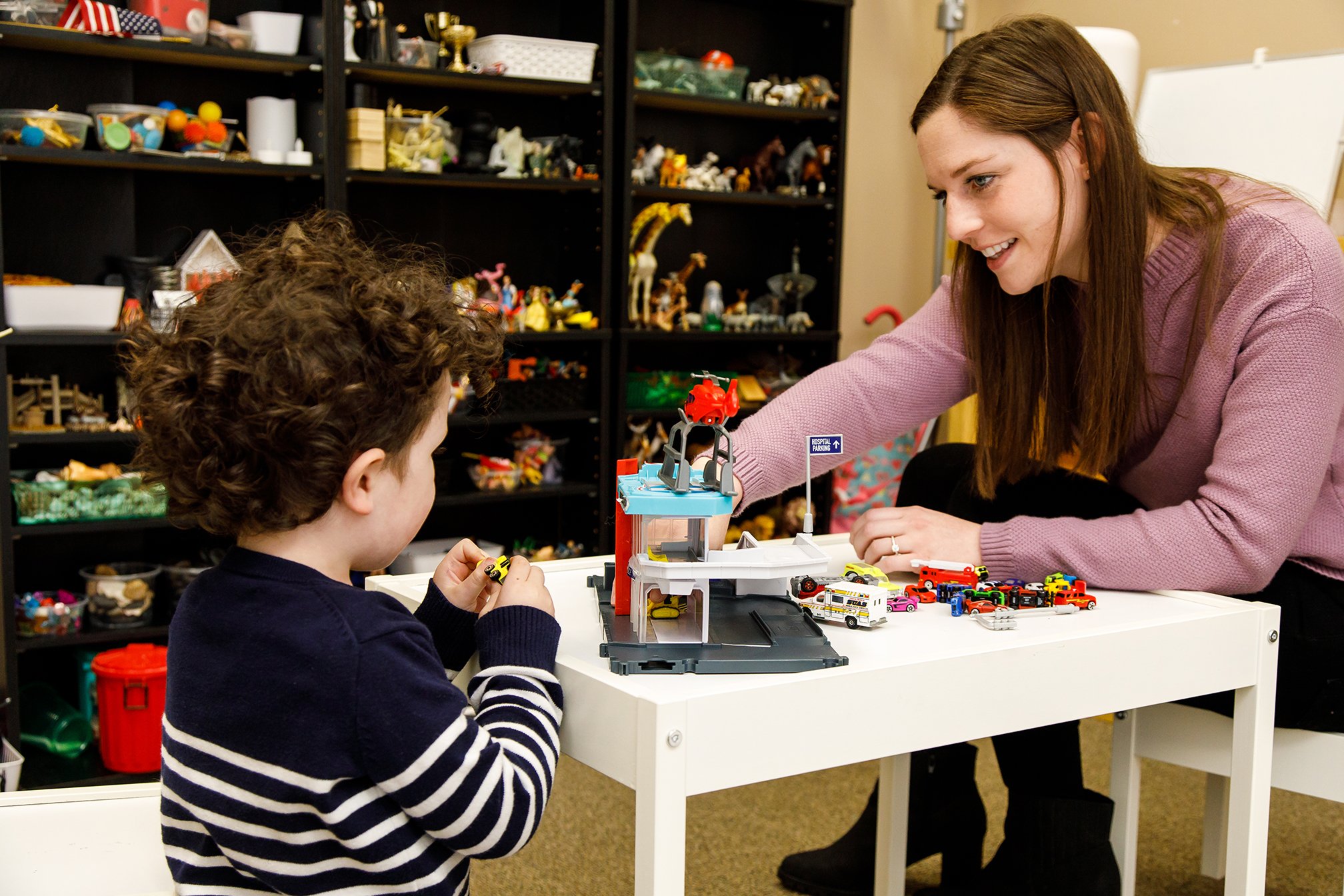
How we handle it: Here's ours. Megan uses Synergetic Play Therapy, which sees a child's symptoms (the meltdowns, the shutting down, the big, baffling behaviors) as signals from a nervous system working hard to feel safe. Kids play out their inner world with toys, and the therapist stays calm and attuned as those big feelings show up. That's called co-regulation, which means a child borrows a steady adult's calm until they can build their own. The toys help, but the therapist is the most important tool in the room.
3. How does first contact work?
A good practice makes the first step clear, simple, and low pressure.
Why it matters: Reaching out is often the hardest part. A confusing intake process can quietly stall things for weeks, and you already have enough on your plate.
How we handle it: You can reach us through our contact page, and we'll get back to you within 2 business days to set up a free 15-minute virtual consultation or the first session (called an intake session). No long forms before you've even talked to a human (those come later 😬).
4. Are fees and payment options laid out clearly?
You should know what therapy costs before your first session, not after.
Why it matters: Money stress is real, and surprises erode trust. A practice that is open about fees is usually open about other things, too.
How we handle it: We are out-of-network with insurance companies, but we can give you monthly superbills. Superbills can be submitted to your insurance company for possible reimbursement. Check out this guide for how to call your insurance company about your out-of-network mental health therapy coverage. We are able to accept HSA/FSA cards for payment. If cost is on your mind, bring it up during your consultation or intake. We'd much rather talk about it up front than have it hover.
5. Do they feel like a good fit?
Trust your gut. The relationship is a big part of what makes play therapy work.
Why it matters: Your child needs to feel safe with this person, and so do you. Kids are remarkably good at picking up on whether their grown-up feels comfortable. (They're less good at picking up their socks, but that's another post. 😂)
How we handle it: You'll find a photo and a short note about each of our therapists on our website, so you can get a feel for who we are before you ever send that first email. Here's a little from Megan:

“I work to establish a therapeutic relationship that ensures trust, safety, and the acceptance to be just who you are. I like to weave in bits of information pertaining to brain and nervous system science to normalize the human experience and provide comfort in connection. I believe that when we understand the brain, honor the nervous system, and prioritize connection, meaningful change naturally follows.
When I am not working, I enjoy spending time with my husband, daughter, and dog, Milo. I enjoy hiking, cycling, and eating my favorite food, pizza.”
Play therapy is often one part of the picture
At Conscious Roots, we believe the past is lived in the present, for kids and for the grown-ups who love them. So while Megan supports your child with Synergetic Play Therapy, we also offer parent support sessions (sometimes called parent coaching) to help you understand your child's behavior and respond in ways that build connection. And if parenting is stirring up your own history, I use EMDR and Brainspotting to help adults process what's underneath. Healing the roots tends to make room for everyone in the family to grow.
What happens when you book a consultation with us?
If you decide to reach out, here's what to expect:
You reach out. Use our contact page to request a consultation.
We talk. On a free 15-minute virtual call, you'll share what's going on with your child, and you can ask about training, approach, fees, and scheduling. Nothing you say will be judged or shocking to us.
We talk honestly about fit. If we're not the right match for your family, we'll tell you and try to point you in a helpful direction.
You decide. If it feels right, we'll schedule a first session. Often this starts with a parent-only session so we can learn your child's story. There's no pressure to commit on the call.
Frequently asked questions
What ages is play therapy for? Play therapy is most often used with children ages three to 12, because play is their natural language.
How is play therapy different from just playing? In play therapy, a trained therapist is attuned to what your child's play is expressing and responds in ways that help their nervous system feel safe. It may look like play from the outside, and that's the point.
Do I get to be involved in my child's play therapy? Yes. Parents are a big part of the process, and our parent support sessions give you tools and insight to use at home between sessions.
A gentle closing thought
The next time you're on the couch at 9:47 p.m. with 11 tabs open, I hope you remember this: you don't have to find the perfect therapist. You're looking for a well-trained, clear, and kind one who feels right for your family. And the fact that you're searching at all says a lot about the parent you already are.
Begin Healing With Conscious Roots Counseling
We specialize in trauma-informed, compassionate care for children. Our therapists offer:
Online and in-person options across Cincinnati, Ohio.
A gentle, attuned approach at your pace
Tools to build safety, connection, and self-trust
If you're ready to get started, visit our play therapy page to learn more detailed information about our approach, or contact us to set up an appointment.
Written by Jenny Liu, LPCC-S
Owner and Therapist at Conscious Roots Counseling
You can email her: jenny@conscious-roots.com